
Preserve & trails
The Woods Between Home and Water
Published October 29, 2026
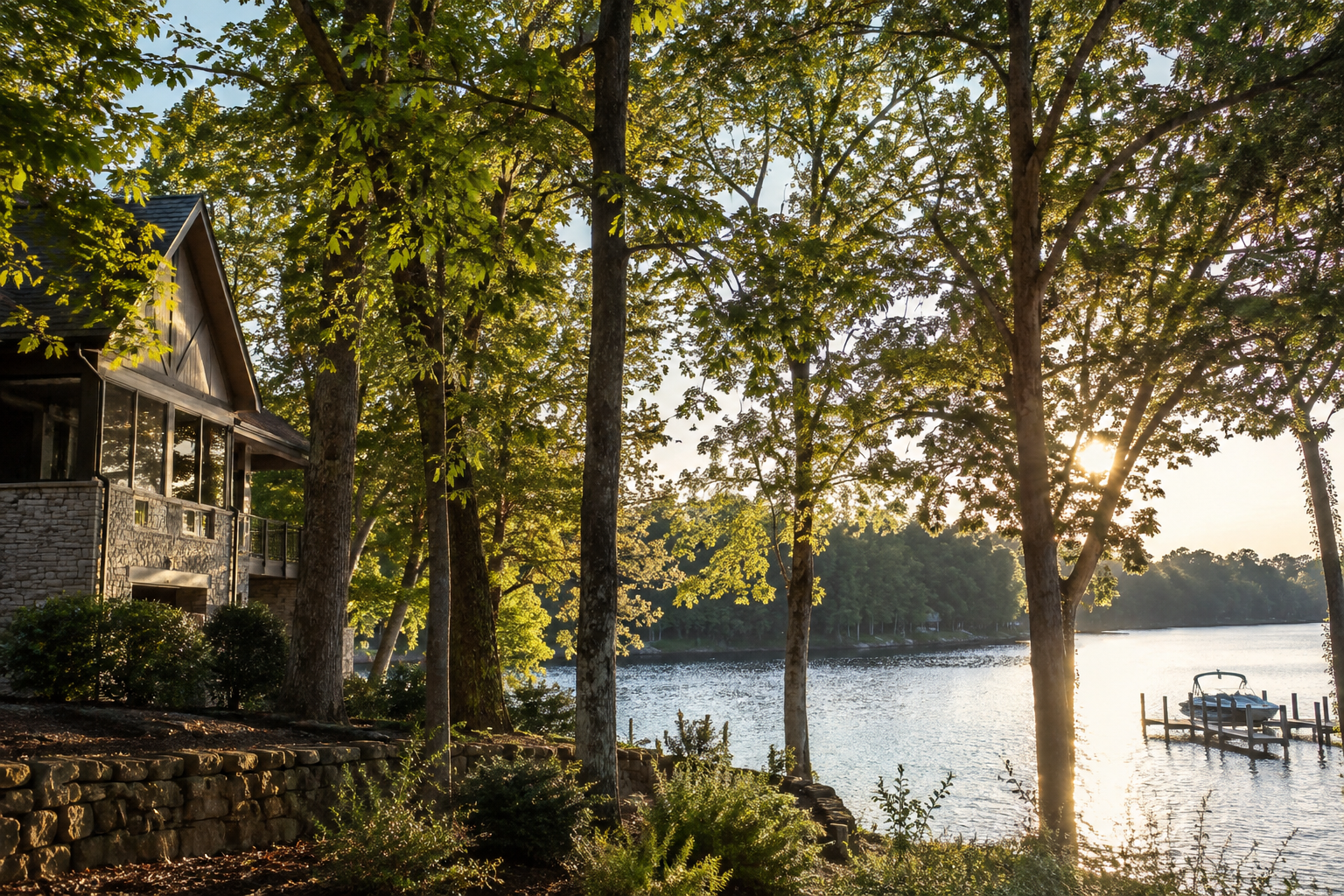
A Landscape Larger Than the Homesites
The Sanctuary’s landscape is best understood on foot. A drive shows the distance between houses; a walk brings the ground between them into focus. Tree roots cross the soil, fallen leaves collect in shallow depressions, and the character of the woods changes as the land rises or drops toward water. Those details explain more about a preserve than a broad view from the road.
Across this 1,350-acre community on Lake Wylie in the Charlotte area, about 300 acres are common open space. Fewer than 200 homesites, ranging roughly from 2 to more than 13 acres, sit within that larger setting. Common open space and private lots are not interchangeable, however. A wooded stretch beside a trail may be part of someone’s property, not an invitation to wander beyond the path.
Roughly 22 miles of resident trails give walking a meaningful place in daily life. The network offers a way to experience the landscape beyond an individual yard, whether the available time is a brief break or a longer outing. The nature preserve overview provides context for understanding that shared landscape without treating every wooded acre as public parkland.
The access distinction matters. The Sanctuary is private, but it is not gated. Its roads are private, and its trails and amenities are for residents rather than the general public. An open entrance does not make the paths public trailheads.
What the Woods Hold
A useful way to look at woodland is in layers. The canopy controls much of the light reaching the ground. Smaller trees and shrubs occupy the space beneath it. At foot level, herbaceous plants, seedlings, mosses and leaf litter create a less conspicuous but equally important layer. Looking at all three makes a walk more informative than simply counting large trees.
In the North Carolina Piedmont, oaks, hickories, tulip poplars and sweetgums are familiar woodland trees. These are regional reference points, not a verified inventory of The Sanctuary. Identifying what actually grows along a particular path takes closer observation: leaf shape, bark, branching pattern and fruit can all help. A fallen leaf is often easier to study than a crown high overhead, though it may have blown from another tree.
The ground layer deserves particular care. Leaves slow the movement of water over soil and provide shelter for small organisms. Fallen branches and decaying logs hold moisture and support fungi and invertebrates. What can look untidy from a garden perspective may be doing useful work in a woodland. There is no need to move a log or clear leaves away to appreciate it.
Moisture and light also help explain why vegetation changes over a short distance. A shaded hollow can support different growth from an exposed slope. Where more sunlight reaches an edge, plants may grow more densely. Rather than assuming each change reflects maintenance, notice the slope, canopy and drainage first.
A photograph is usually the best thing to take home. Photograph leaves where they grow, include the stem or bark when useful, and leave plants rooted in place. Avoid tasting berries or handling unfamiliar plants on the strength of an identification app. The point is to become more attentive, not to turn every walk into a collecting trip.
Wildlife Without a Checklist
The most useful wildlife habit is to slow down. Animals are often detected first through sound or movement: a rustle under leaves, a bird shifting between branches, or an insect working across a fallen trunk. Walking quietly and pausing occasionally can reveal activity that a steady conversation or headphones would obscure.
Deer, squirrels, woodland birds and many kinds of insects are familiar inhabitants of Piedmont landscapes. That regional context should not become a promise of specific sightings in The Sanctuary. An animal’s presence depends on food, shelter, weather and disturbance, and one sighting does not establish a resident population. Tracks and other signs can be interesting without requiring an immediate, certain identification.
Habitat matters at several scales. A mature tree may provide feeding opportunities overhead while its roots stabilize soil below. Dense vegetation can offer cover, and leaf litter supports organisms that become food for other animals. A preserve is not just scenery around larger wildlife; much of its activity is small, quiet and easily missed.
Give any animal an unobstructed way to leave. Do not feed wildlife, approach a nest or follow an animal off the path for a better photograph. For residents walking with dogs, keeping them close and following current community rules helps limit disturbance. Repeated ordinary decisions matter more than an occasional dramatic encounter.
Making the Trails Part of an Ordinary Day
A 22-mile network does not need to be approached as a mileage goal. Its everyday value can be a familiar walk repeated often enough to learn its turns, grades and footing. A short route that fits comfortably between commitments is more useful than an ambitious outing that leaves no margin for the return.
Before trying an unfamiliar section, consult current resident information about routes, access and any closures. The guide to trails and hiking offers an editorial starting point, but it should not replace current community guidance. Do not assume every path forms a loop or that a visible connection is an authorized route.
A few preparations keep the focus on the walk:
- Allow time to return before daylight fades.
- Wear shoes suited to roots, loose leaves and uneven ground.
- Carry water and check the weather before leaving.
- Respect closures and avoid widening muddy sections by walking through adjacent vegetation.
The 17-acre waterfront amenity area is another part of the community’s outdoor setting. Read about Camp Sanctuary and its waterfront setting separately when planning an outing; proximity on a map does not establish a trail connection or access across a homesite. This guide is independent editorial, not the homeowners association, and is not endorsed by the HOA, board, management company or developer.
The most rewarding trail habit is learning a manageable stretch well enough to notice what is growing, moving and changing beside it. Staying on the path and leaving the woods undisturbed helps keep that experience available for the next walk.
This journal is part of an independent editorial guide to The Sanctuary at Lake Wylie. It is not written or approved by the homeowners association. Verify anything you intend to rely on.
← All journal entriesRead the full guides
- The Preserve & 22 Miles of Trails
Permanently protected woodland, a private trail network, and the wildlife that lives within it.
- Trails, Hiking & Preserve Walking Guide
Twenty-two miles of private loops — shoreline routes, preserve interior, difficulty, seasons and wildlife.
- Camp Sanctuary Amenity Village
Pools, tennis, the canoe and kayak boating center, and how residents use the 17-acre waterfront year-round.
More from the journal
Neighborhood comparison
Lake Wylie and the Charlotte Buyer’s ShortlistLake Wylie belongs on a Charlotte-area shortlist when buyers weigh actual travel routes, usable water access and land alongside the purchase price.
Amenities
A Week Around the Amenity VillageThe waterfront amenity village gives residents a shared destination for exercise, paddling and time together without prescribing how their week should look.
Smart homes
Smart Technology That Knows When to DisappearThe best home technology reduces daily friction without turning rooms into control centers or making simple tasks depend on a screen.