
Smart homes
Smart Technology That Knows When to Disappear
Published October 26, 2026
Begin with the ordinary day
A quiet luxury home should not require instructions before someone can turn on a lamp. Technology earns its place when it makes familiar actions easier: entering with groceries, reading after sunset, cooling a bedroom or closing shades without walking from window to window. The equipment matters less than the experience it creates.
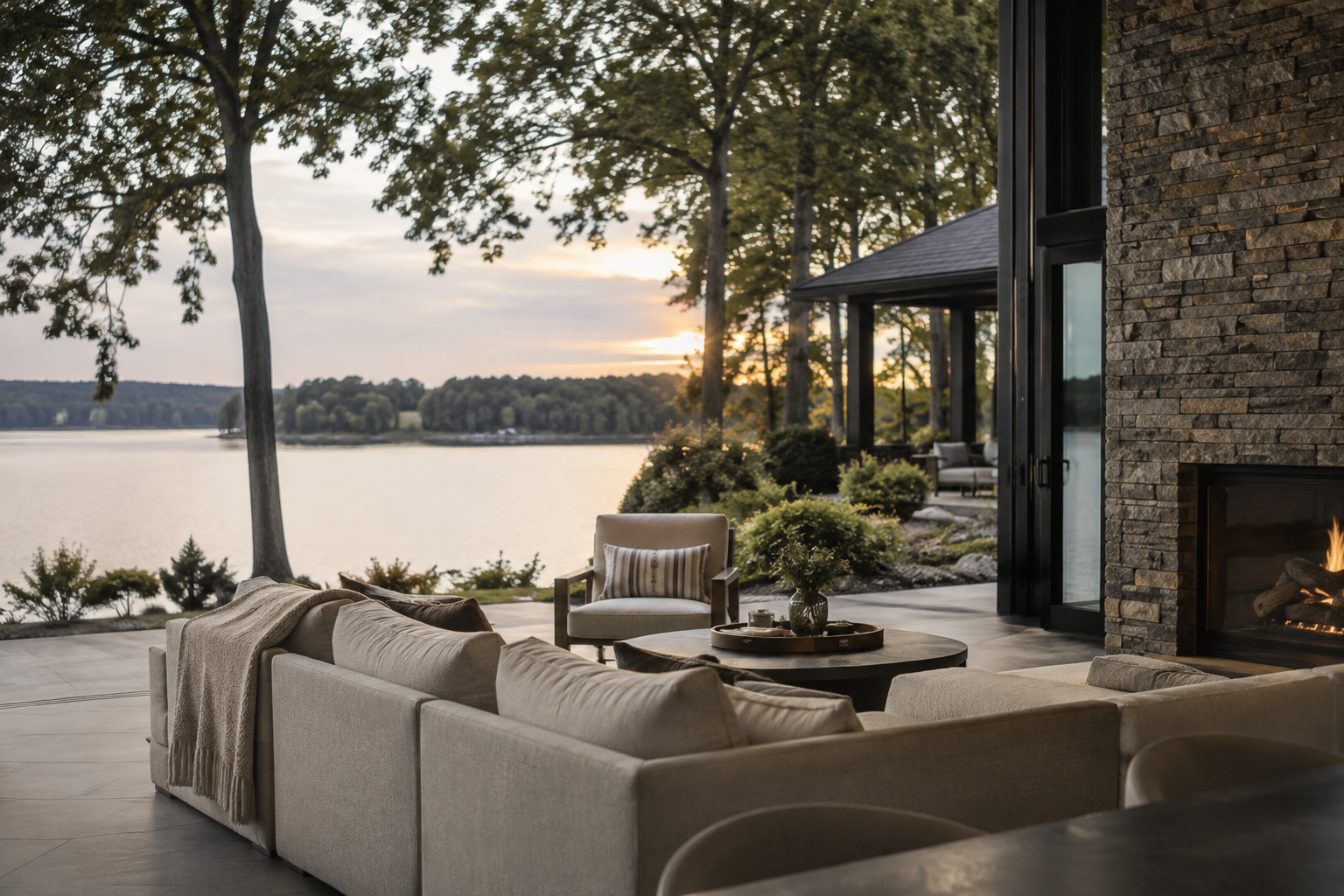
At The Sanctuary on Lake Wylie, wooded homesites of roughly 2 to 13-plus acres make the relationship between house and landscape particularly important. Glass can frame trees while admitting glare. A long floor plan can separate bedrooms from the equipment that serves them. Outdoor sound and nighttime lighting need restraint, even where houses have substantial space between them.
Start with a written account of how the household lives rather than a catalog of devices. Describe waking, leaving, arriving, entertaining and sleeping. Then identify which actions should happen automatically and which deserve a deliberate touch. Our smart-home planning guide is a useful starting point for thinking about systems as part of the house, not accessories added afterward.
A simple test helps: can a guest operate the room without downloading an app? If not, the design may be asking too much of its occupants.
Make lighting and shades work together
Lighting is often the most noticeable technology because poor control changes how every material looks. An evenly spaced grid of bright ceiling fixtures can flatten a carefully designed room. Separate ambient light, task light and accent light so each has a clear purpose, then give those layers controls that feel obvious.
Choose a few useful scenes rather than a long menu of moods. An evening setting might lower ceiling light while keeping reading lamps comfortable. A nighttime setting can provide a low-level route between the bedroom and bathroom without flooding either room. Keep a familiar wall control at the entrance; the phone should be an option, not the only switch.
Review dimming performance with the actual fixtures and drivers before committing to them throughout the house. Some combinations flicker, hum or fail to dim smoothly at low levels. A small mockup can reveal problems that a specification sheet cannot.
Motorized shades deserve equally early attention. Recessed pockets, wiring routes and access for maintenance affect the architecture. Coordinate them with window trim, drapery and furniture through the interior design process, rather than treating the shade cassette as something to conceal later.
Schedule shades around real exposure and privacy needs, with an easy override. A timer cannot know that someone is enjoying the last light through the trees. Exterior fixtures should likewise illuminate steps and arrival points without washing the woods in light.
Let sound and comfort stay in the background
Invisible audio is not simply a matter of painting speaker grilles. Speaker placement should follow seating, room proportions and listening habits. A kitchen used for conversation needs a different approach from a room intended for focused listening. More speakers at restrained levels may provide more even coverage than a few playing loudly, but the layout needs professional evaluation.
Ask to hear proposed architectural speakers before specifying them. Concealment can involve compromises in sound, service access or construction. Keep amplifiers and network equipment in a ventilated, accessible location, not a sealed cabinet chosen solely because it is out of sight.
Outside, direct speakers toward the listening area and keep volume modest. Acreage does not guarantee acoustic privacy; sound can carry beyond the place where it is intended to stay.
Climate control should begin with the building envelope and mechanical design. Automation cannot correct poorly sized equipment, unbalanced ductwork or an uncomfortable room with excessive solar gain. Ask the mechanical designer how window exposure, occupancy and room use inform the proposed zones.
Remote temperature sensors can help avoid prominent thermostats in every room, but their placement must reflect conditions where people sit and sleep. Review humidity control and equipment noise alongside temperature. A system that maintains a setpoint while interrupting conversation has solved only part of the problem.
Keep security clear and controls resilient
The Sanctuary is private, not gated. Its private roads, resident-only trails and amenities do not constitute controlled entry; there is no gatehouse, guard or 24/7 controlled access. Home security should therefore be considered on its own merits, without assumptions about a neighborhood checkpoint.
Place cameras to observe your own approaches and entrances while minimizing views into neighboring property. Confirm recording settings, retention periods and who can access footage. Indoor cameras deserve particular care in guest rooms and private living spaces; intrusion sensors may meet a need without recording household activity.
Ask an installer to explain what happens when internet service fails, power goes out or a subscription ends. Essential functions need understandable fallback behavior. Mechanical key access, local lighting controls and clear instructions can matter more than another automated feature.
Before approving the system, request:
- A demonstration of everyday controls with the internet disconnected.
- An account-ownership and administrator-access handover plan.
- Written documentation of wiring, equipment locations and recovery procedures.
- A maintenance plan that identifies subscription dependencies and service responsibilities.
Use unique credentials and multifactor authentication where supported. Separate guest and connected-device networks where practical, with someone accountable for configuration and updates.
Design for the next owner—and the next repair
Discreet technology still needs physical space. Accessible cable routes, spare conduit, labeled wiring and serviceable equipment locations are worth discussing during custom-home planning. They make future changes less dependent on opening finished walls.
Avoid making every function dependent on one elaborate sequence. Lighting, climate, shades and security should remain understandable individually, even when an interface brings them together. At handover, walk through ordinary tasks with the installer and keep a concise printed guide where the household can find it.
This guide is independent editorial, not the homeowners association, and is not endorsed by the HOA, board, management company or developer.
The best technology leaves a room feeling like a room, not a demonstration. Plan it carefully enough that daily life rarely requires thinking about it.
This journal is part of an independent editorial guide to The Sanctuary at Lake Wylie. It is not written or approved by the homeowners association. Verify anything you intend to rely on.
← All journal entriesRead the full guides
- Smart Home & AV Guide
Networking, lighting, audio-video and security planning that must happen during pre-wire, not after.
- Custom Home Building Guide
Selecting a builder, the approval sequence, budgets and realistic timelines for a custom build.
- Interior Design Guide
Interior direction for lake-facing homes — materials, light, and working with a designer early.
More from the journal
Neighborhood comparison
Lake Wylie and the Charlotte Buyer’s ShortlistLake Wylie belongs on a Charlotte-area shortlist when buyers weigh actual travel routes, usable water access and land alongside the purchase price.
Amenities
A Week Around the Amenity VillageThe waterfront amenity village gives residents a shared destination for exercise, paddling and time together without prescribing how their week should look.
Preserve & trails
The Woods Between Home and WaterThe Sanctuary’s preserve and trail network make room for everyday walking while keeping the needs of a living woodland in view.