
Amenities
A Week Around the Amenity Village
Published November 2, 2026
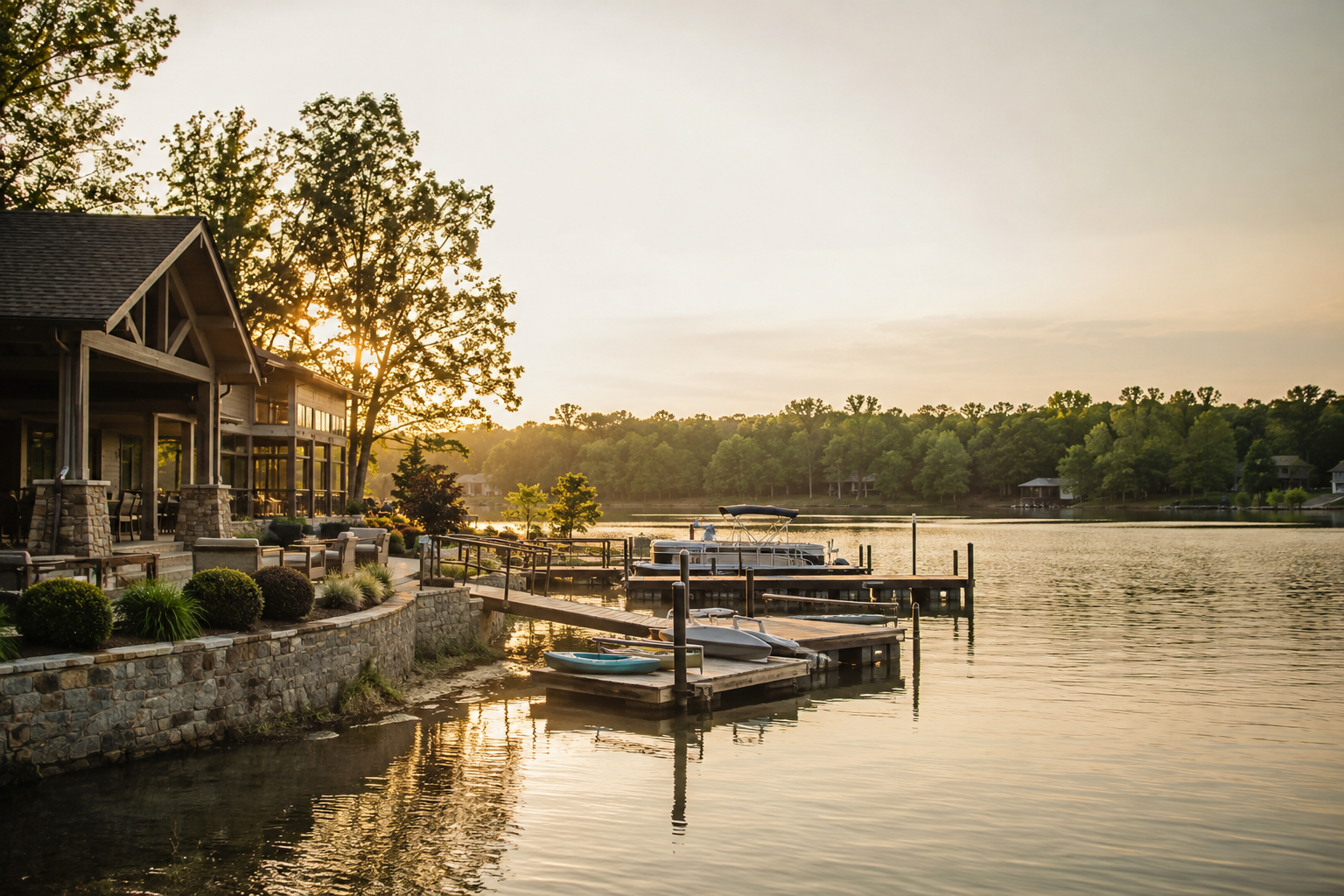
A Shared Destination in a Spread-Out Community
At The Sanctuary, the amenity village serves a practical purpose: it gives a deliberately spread-out neighborhood somewhere to come together. Across 1,350 acres, fewer than 200 homesites range from roughly 2 to more than 13 acres. That arrangement makes room for privacy at home. The 17-acre waterfront amenity area provides the counterpart—a place residents can choose to share.
Pools, tennis and the canoe and kayak boating center make that destination useful for different reasons. One household might organize a visit around swimming; another might head toward the water with paddling in mind. A resident event offers a different reason to leave the house, particularly for someone still getting to know the neighborhood.
The distinction between private and gated matters here. The Sanctuary is not gated and has no gatehouse, guard or round-the-clock controlled access. Its privacy comes through private roads and resident-only trails and amenities, not a staffed entrance. That is the right framework for understanding the village: a shared residential resource, rather than a public recreation complex or a guarded resort.
For a closer look at this waterfront gathering place, our guide to Camp Sanctuary provides a useful starting point. Its importance is easiest to understand through an ordinary week, rather than a checklist of features.
The Weekday Visit: Swimming or Tennis
Imagine a week with one pool visit and one tennis session. That is an illustrative routine, not a published community schedule, but it shows how amenities can fit into daily life without becoming a major undertaking. A short visit can be worthwhile on its own; it does not have to expand into an afternoon at the lake.
Pools create an option for time outside that differs from walking the trails or paddling. For a household with children, a swim may be the main activity. For other residents, the appeal may simply be having a pool destination away from their own property. Either way, a shared amenity separates the experience from the work and space demands of a backyard pool.
Tennis asks for a little more coordination. Finding a compatible playing partner and agreeing on a time can matter as much as having courts nearby. Someone who expects to play regularly should ask about current court-use procedures and how residents connect with other players, rather than assuming there is a standing match or organized program waiting for them.
Before building a routine around either amenity, confirm the practical details through current official community information:
- Seasonal availability and operating hours for the pools.
- Court access and any reservation procedures for tennis.
- Guest policies and applicable supervision requirements.
- Current notices about closures or maintenance.
Those details are worth checking because they determine whether an amenity fits the hours a household actually has available. Our overview of the community’s amenities helps frame the broader choices, but it should not replace current operating guidance.
A Paddle Changes the Pace
The canoe and kayak boating center gives the waterfront area a different role from the pools and courts. It makes small-craft paddling part of the amenity picture, with the lake itself becoming the setting for the activity. For residents drawn to quieter forms of recreation, that may be the most relevant feature of the village.
A paddle also requires a different kind of planning. Weather, wind, visibility and boat traffic deserve attention before departure. So do personal flotation devices, a realistic route and a clear return plan. Living near the water does not remove those considerations, and a familiar shoreline is no reason to overlook changing conditions.
The presence of a boating center should not be read as a promise about equipment. Residents should confirm current arrangements for access, available craft, storage and use rather than assuming that boats, instruction or unrestricted availability are included. Those are operational questions, and the answers should come from the appropriate official source.
In the rhythm of a week, paddling can occupy a longer window than a quick swim or a tennis match. It might be the activity saved for a free morning when conditions cooperate. There is no need to turn every waterfront visit into an outing, either; a household can value lake access without making boating its central pastime.
The wider landscape offers another option. About 300 acres of common open space and 22 miles of resident trails mean that recreation is not concentrated entirely at the waterfront. A week can include the village, the trails, both or neither, depending on work, weather and energy.
Events Without an Obligatory Social Calendar
Resident events add a social dimension to the amenity village, but they should be understood through the current calendar rather than an imagined lineup. Specific formats, frequency, registration requirements and locations need confirmation. It would be misleading to suggest a weekly gathering or recurring tradition without verified information.
For a new resident, an event can provide a straightforward introduction to neighbors. For an established household, it may be an occasional addition to routines already built around swimming, tennis or paddling. Participation need not define someone’s place in the neighborhood. Shared facilities work best when they accommodate both conversation and a visit focused on the activity itself.
Our editorial guide to community life explores that relationship between private homes and shared spaces. This website is an independent editorial resource, not the homeowners association, and it is not endorsed by the HOA, board, management company or developer. Official policies and event notices remain the sources to consult for current arrangements.
A useful way to assess the amenity village is to picture a normal week and identify which visits would genuinely fit. Its value lies in those repeatable choices—a swim, a match, a paddle or time with neighbors—not in keeping every day occupied.
This journal is part of an independent editorial guide to The Sanctuary at Lake Wylie. It is not written or approved by the homeowners association. Verify anything you intend to rely on.
← All journal entriesRead the full guides
- Camp Sanctuary Amenity Village
Pools, tennis, the canoe and kayak boating center, and how residents use the 17-acre waterfront year-round.
- Amenities, Commutes & Nearby Charlotte
Drive times to Uptown, the airport, Ballantyne and SouthPark, plus everyday shopping, dining and healthcare.
- The Sanctuary Community Guide
The 1,350-acre master plan, HOA structure and how the community fits into Lake Wylie.
More from the journal
Neighborhood comparison
Lake Wylie and the Charlotte Buyer’s ShortlistLake Wylie belongs on a Charlotte-area shortlist when buyers weigh actual travel routes, usable water access and land alongside the purchase price.
Preserve & trails
The Woods Between Home and WaterThe Sanctuary’s preserve and trail network make room for everyday walking while keeping the needs of a living woodland in view.
Smart homes
Smart Technology That Knows When to DisappearThe best home technology reduces daily friction without turning rooms into control centers or making simple tasks depend on a screen.