Buyers searching for gated communities near Charlotte are usually choosing between three very different propositions dressed in similar marketing. Some communities are organized around a golf course and a club. Some are organized around proximity to south Charlotte. A small number are organized around land and water. Knowing which one you are buying is most of the decision.
The Three Models
Club-centered. Ballantyne Country Club, Providence Country Club and Quail Hollow build community life around golf, tennis and a clubhouse calendar. Lots are typically a quarter to half an acre, homes sit closer together, and the club — with dues on top of HOA assessments — is the amenity. Excellent if golf is your center of gravity.
Proximity-centered. Gated enclaves inside I-485 trade land for drive time. Smaller lots, higher density, shortest commutes to SouthPark and Uptown. Suited to buyers who value being close in above space.
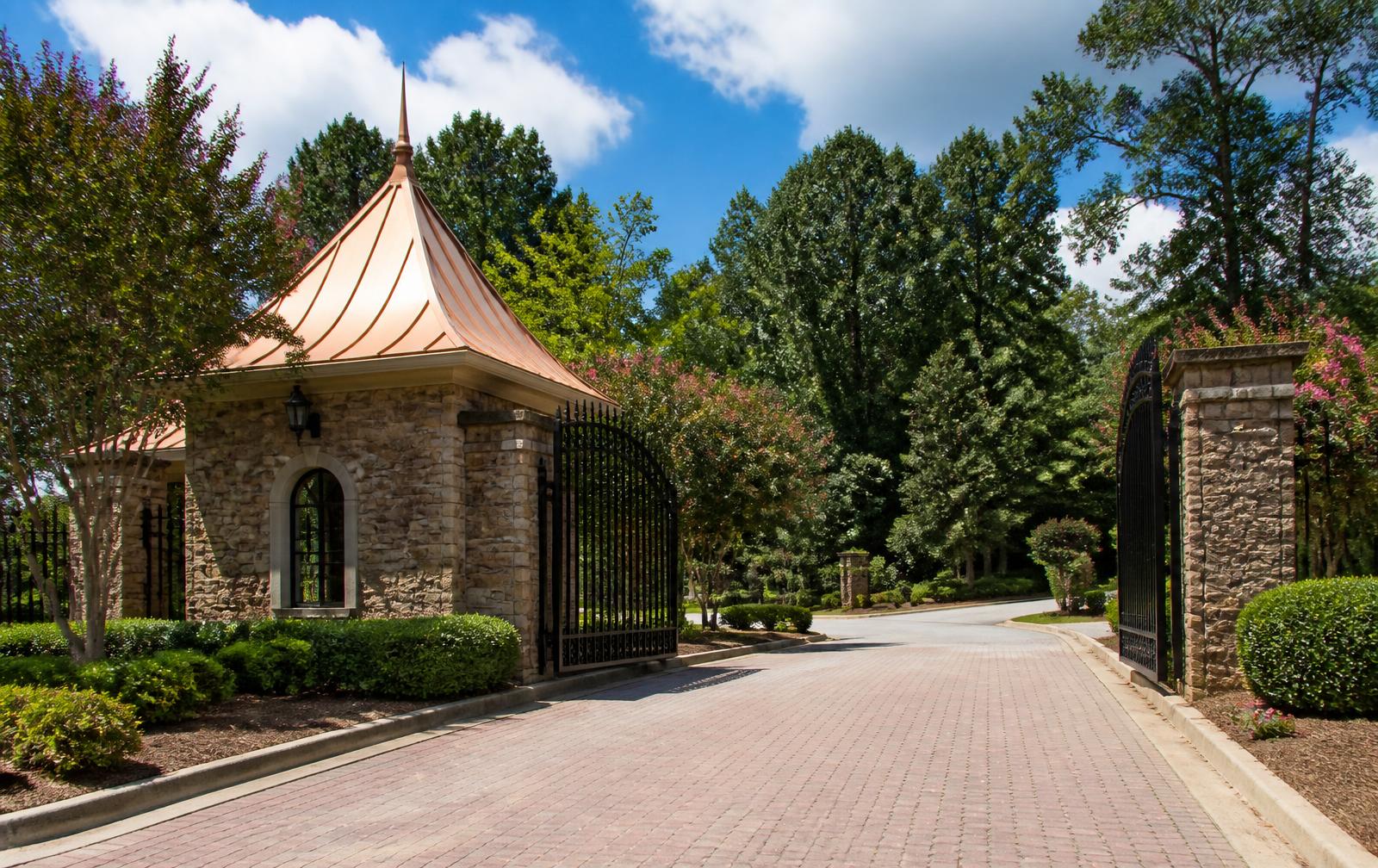
Land-and-water-centered. The Sanctuary at Lake Wylie and, in a different form, The Palisades organize around the lake and open land. The Sanctuary, which is private but not gated, is the largest luxury community on the Charlotte side of Lake Wylie: 1,350 acres, more than 675 of them permanently protected, one- to three-acre homesites, private shoreline, a lake beach and roughly twenty miles of trails — with no mandatory club membership.
What to Compare, Line by Line
- Lot size and spacing — the difference between hearing your neighbor's HVAC and hearing owls
- Total annual carrying cost — HOA plus club dues plus assessments, not HOA alone
- Custom vs. builder-controlled — whether you can bring your own architect and builder
- Protected land — whether the green space is covenanted or merely undeveloped for now
- Water access — shoreline, docks, launches, and whether they are private to residents
- Real commute — driven at your real departure time, not estimated
- School district and state line — verified by address
- Airport time — decisive for frequent travelers, and often overlooked
Cost Structure Is Where Buyers Get Surprised
A club community's headline HOA figure rarely reflects the true annual cost. Initiation fees, mandatory minimums, food and beverage spend and capital assessments can multiply it. Communities without a mandatory club — The Sanctuary among them — concentrate assessments on gate operations, private roads, preserve stewardship and the amenity village. Neither model is inherently better; they simply serve different lives. Compare totals, not line items.
What Cannot Be Added Later
Clubhouses are renovated every decade or two. Amenity packages get upgraded. Interiors get redone. The things that cannot be created after the fact are acreage, shoreline and permanently protected forest — which is why they anchor long-term value in a metro growing as quickly as Charlotte's southwest corridor. A community can build a new pool. It cannot manufacture a 675-acre preserve or private lake frontage.
How The Sanctuary Compares
Against club communities, The Sanctuary trades golf for water, trails and land, and removes mandatory club dues. Against close-in enclaves, it trades roughly ten minutes of drive time for several times the lot size — and gains proximity to the airport. Against other Lake Wylie neighborhoods, it offers gated access, custom construction under architectural review, and a shoreline buffered by protected forest rather than by adjacent lawns.
How to Tour Properly
See finalists twice — once on a weekday morning and once on a weekend afternoon. Walk the amenity core when residents are actually using it. Ask for the last three years of assessments and any pending capital projects. Drive your commute. Then compare only what will still be true in twenty years.