
Neighborhood comparison
Lake Wylie and the Charlotte Buyer’s Shortlist
Published November 9, 2026
Start with the drive you actually make
A Charlotte-area home search often begins with a broad choice: live closer to the city, look north toward Lake Norman, or head toward Lake Wylie. Those labels help organize a map, but they do not tell you how a Tuesday will work. The useful comparison starts with destinations, departure times and the number of trips your household makes each week.
The Lake Wylie side deserves particular attention from buyers whose routines pull toward western or southwestern Charlotte. Lake Norman warrants the same consideration for households with regular destinations north of the city. Neither observation establishes a commute winner. A workplace address, the approach to a highway and the final stretch of local roads can matter more than the lake attached to the neighborhood’s name.
At The Sanctuary, evaluate the route from the particular homesite, not just from the neighborhood’s edge. A large, low-density community adds an internal leg to every outing. Private roads do not remove the need to account for that leg, especially when comparing a wooded acreage property with a home near everyday destinations.
Test the shortlist under ordinary conditions rather than relying on a weekend visit:
- Drive the work route at your expected departure and return times.
- Add the school, grocery or activity stop you would normally combine with it.
- Check an alternate route rather than assuming the fastest option will always be practical.
- Repeat the exercise from each serious contender using the same destinations.
Our guide to Lake Wylie versus Lake Norman provides a broader comparison. Use it to frame the decision, then let your own trips supply the travel-time evidence.
Separate the lake from your access to it
“Near the water” can describe very different ways of living. A waterfront property, an interior homesite in a lake community and a house within driving distance of a public launch should not occupy the same column on a comparison sheet. Each creates a different relationship with the shoreline.
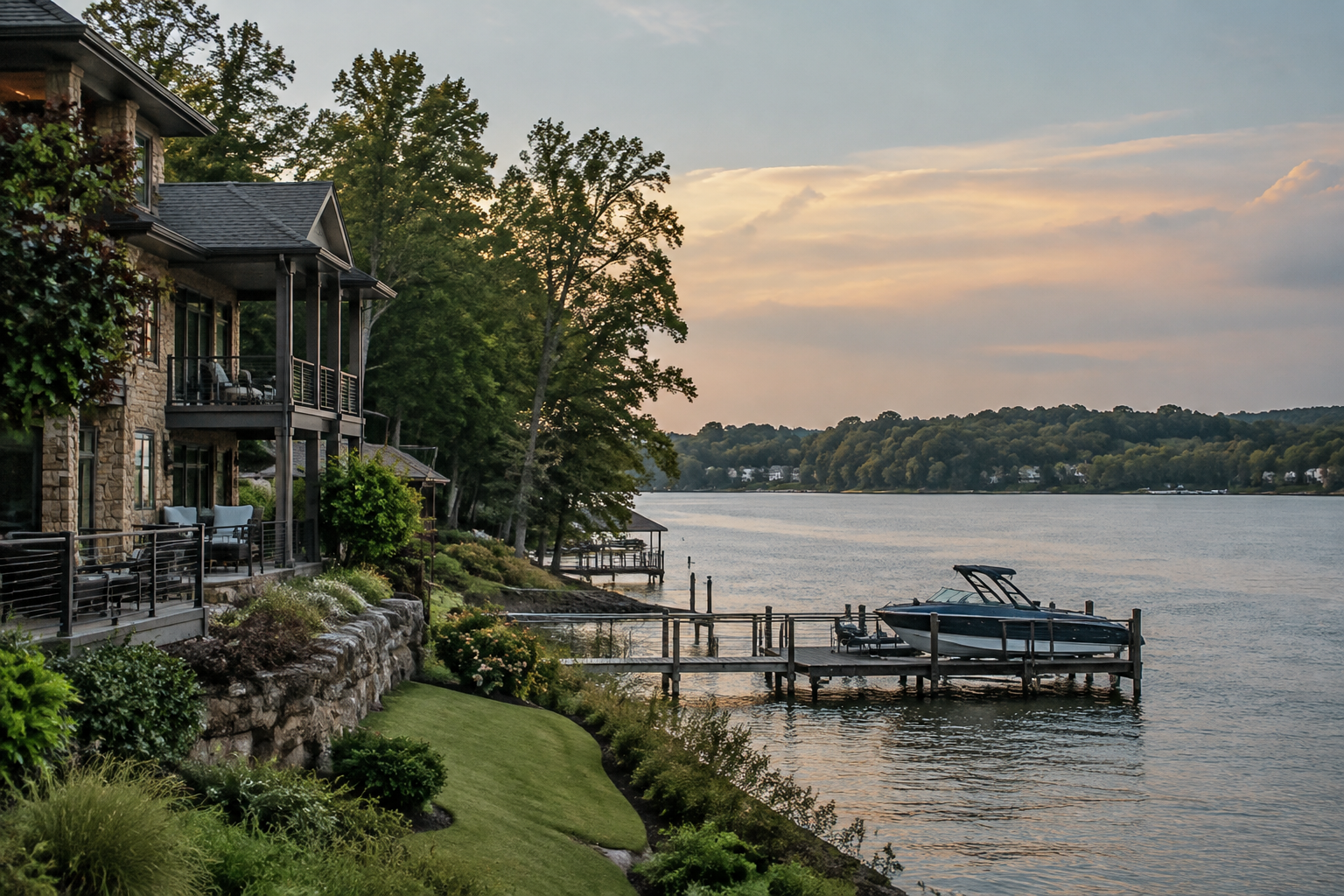
The Sanctuary is a 1,350-acre private community on Lake Wylie with a 17-acre waterfront amenity area. That shared waterfront setting is part of its appeal, but it should not be confused with private shoreline ownership at every homesite. Buyers should distinguish what belongs to an individual property from what residents share, and verify the rules governing any intended use.
Apply that same standard around Lake Norman and elsewhere on Lake Wylie. If boating is central to the move, establish the actual access arrangement rather than treating a lake address as sufficient. If your interest is walking near the water or spending an occasional afternoon at the shoreline, your priorities may be quite different.
Lake Wylie also crosses the North Carolina–South Carolina boundary. A lake-wide search can therefore involve different school systems and tax jurisdictions. The Sanctuary’s public schools are Charlotte-Mecklenburg Schools; buyers should confirm current address-specific assignments directly with the district rather than extrapolating from nearby communities or older property descriptions.
For a wider look at daily routines beyond the shoreline, our guide to living in Lake Wylie is a useful companion. The question is not simply which lake you prefer, but how often and in what way you expect to use it.
Compare usable land, not just acreage
The Sanctuary’s land pattern is a meaningful distinction: fewer than 200 homesites, generally ranging from roughly 2 to 13-plus acres, within a community that includes about 300 acres of common open space and 22 miles of resident trails. That is a different proposition from a smaller residential lot, even when both properties offer similarly sized houses.
Acreage can provide separation, room for a carefully positioned house and a longer view through the trees. It also requires more investigation. Two parcels with the same acreage may differ substantially in slope, drainage, buildable area and the relationship between the house site and neighboring properties.
Do not assume that a larger parcel permits every outdoor feature you have in mind. Review recorded restrictions, applicable approvals and site conditions before assigning value to a future pool, garden or accessory structure. Existing homes deserve the same scrutiny: a broad property boundary does not necessarily translate into a broad, level yard.
Shared open space and resident trails also serve a different purpose from privately owned acreage. They can expand the places available for walking without becoming land you personally control. A sound comparison keeps the homesite, common landscape and waterfront amenities separate, then considers how each supports your routine.
One distinction should be explicit: The Sanctuary is not gated. Its privacy comes from private roads, resident-only trails and amenities, and its low-density layout—not a gate, guard or controlled entrance. Buyers comparing it with gated communities should treat that as a real difference rather than interchangeable language.
Read price posture through the whole property
Without a current, verified set of comparable properties, declaring Lake Wylie cheaper or more expensive than another Charlotte-area market would be misleading. Price posture is more useful when it describes what a buyer is paying for: proximity, shoreline, acreage, house condition or a particular combination of those attributes.
At The Sanctuary, acreage and a private community setting belong in that calculation. Compare those characteristics with what the same budget would need to cover elsewhere, but avoid reducing the exercise to price per square foot. That measure cannot fully explain differences in land, water access or location.
Then examine ongoing ownership obligations. Ask for current association documents and assessments, obtain property-specific insurance information, and consider landscape maintenance and any planned site work. Across state lines, compare taxes using the relevant property and jurisdiction rather than a general claim about which state costs less.
Our Charlotte-area neighborhood comparisons can help organize the shortlist. This guide is independent editorial, not the homeowners association, and is not endorsed by the HOA, board, management company or developer.
The strongest choice is the one whose routes, water access, land and ownership costs fit the life you actually lead. Give each contender the same practical tests, and the differences become clearer than any broad claim about which side of Charlotte is best.
This journal is part of an independent editorial guide to The Sanctuary at Lake Wylie. It is not written or approved by the homeowners association. Verify anything you intend to rely on.
← All journal entriesRead the full guides
- Lake Wylie vs Lake Norman
Size, boat traffic, airport and Uptown commutes, taxes, schools and waterfront value compared.
- Neighborhoods Near The Sanctuary
How The Sanctuary compares to other Lake Wylie and south Charlotte luxury communities.
- Living in Lake Wylie
A relocation guide: commutes, the NC/SC line, cost of living, healthcare and year-round lake life.
More from the journal
Amenities
A Week Around the Amenity VillageThe waterfront amenity village gives residents a shared destination for exercise, paddling and time together without prescribing how their week should look.
Preserve & trails
The Woods Between Home and WaterThe Sanctuary’s preserve and trail network make room for everyday walking while keeping the needs of a living woodland in view.
Smart homes
Smart Technology That Knows When to DisappearThe best home technology reduces daily friction without turning rooms into control centers or making simple tasks depend on a screen.